
BACKGROUND OF THE INVENTION 1. Field of the Invention The present invention relates to a method for smelting and processing high-temperature refractory materials, and particularly to a production process method for fused magnesia.
Magnesite is magnesia, which can be made from minerals such as magnesite, brucite, dolomite, serpentine, olivine and other minerals. Magnesite and brucite are generally used as raw materials for calcination and decomposition into magnesia. The crystals are different due to different calcination temperatures. Magnesium oxide obtained by calcination at 600-1000 ℃ is called active magnesia. Magnesium is called dead burned magnesia. The above two kinds of magnesia are also known as light magnesia, commonly known as furnace kiln magnesia.
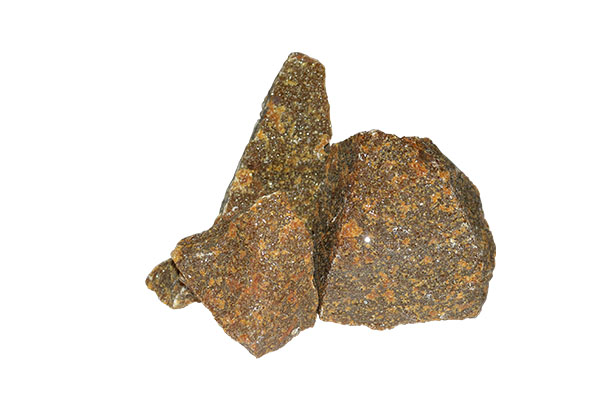
At present, the process method for producing fused magnesia is to generally use an electric furnace for smelting and directly smelt magnesium ore. The disadvantage is that it consumes a large amount of electricity. In addition, using the existing process, each ton of qualified fused magnesia (purity higher than 96.5 %) Also needs to consume 80 kg of carbon fine rods. The relevant materials ("Special Refractory Materials", "Magnesia Technology", "High-Temperature Refractory Papers") show that heating the lightweight magnesia with an electric arc can produce a formula The structure of the crystal is heavy magnesium oxide with a melting point of 2800 ° C, which is also fused magnesia. The magnesia produced in the kiln can be recrystallized by electric furnace melting to produce electro-fused magnesia.


